By Daniel R. · Updated 2026-08-19 · 13 min read
An ip-tv provider is a service that sends live television, pay-per-view events, and video-on-demand over your internet connection instead of through a cable box or satellite dish. When the service works well, it feels like a normal TV package: channels appear in a guide, live sports start at the scheduled time, and movies sit in a library ready to play.
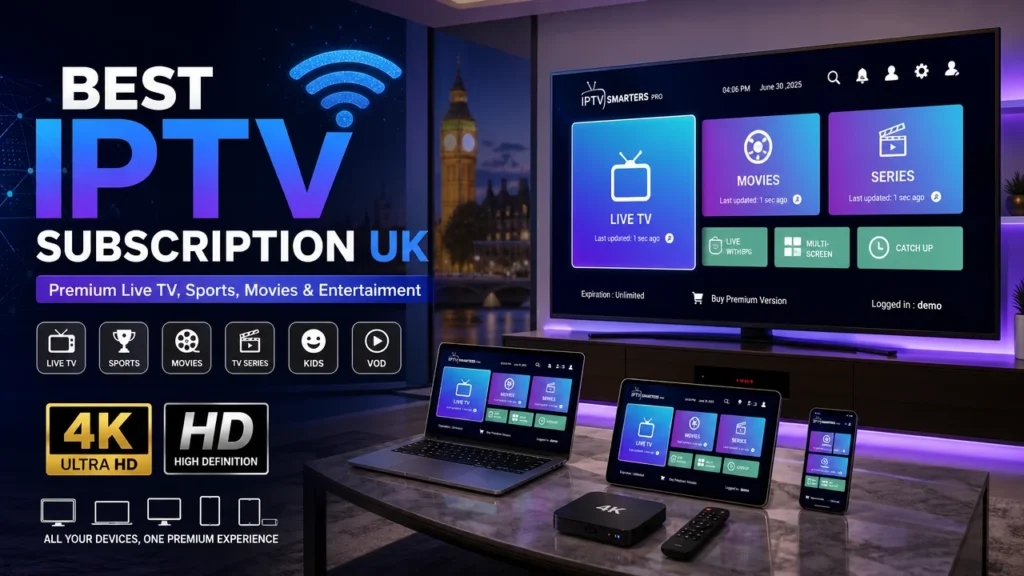
The screen above is the kind of interface you should expect after signing in: a channel grid, a live sports row, and an on-demand section. The challenge is not finding a provider — there are hundreds — but separating the ones with stable servers, honest billing, and the specific channels you need from the ones that buffer constantly, hide their legal status, or disappear after a month.
Your ideal choice depends on four things: the content you actually watch, your internet speed, the device you stream on, and the legal carriage rights available where you live. This guide walks through each of those factors before any recommendation.
What Is an ip-tv provider Exactly?
An ip-tv provider uses Internet Protocol television technology to deliver video streams. Instead of tuning into a frequency or decoding a satellite signal, your device receives data packets over the same broadband connection you use for web browsing. The provider may operate its own servers or rent capacity from a larger network.
There is an important split in the market. Some providers hold licenses for every channel they offer. Others operate in a gray area, reselling streams without full carriage rights. That distinction matters for long-term reliability, payment security, and whether the service may suddenly go offline. A legitimate provider should be able to tell you which regions its licenses cover, and it should not rely on vague language like “worldwide channels” with no legal basis.
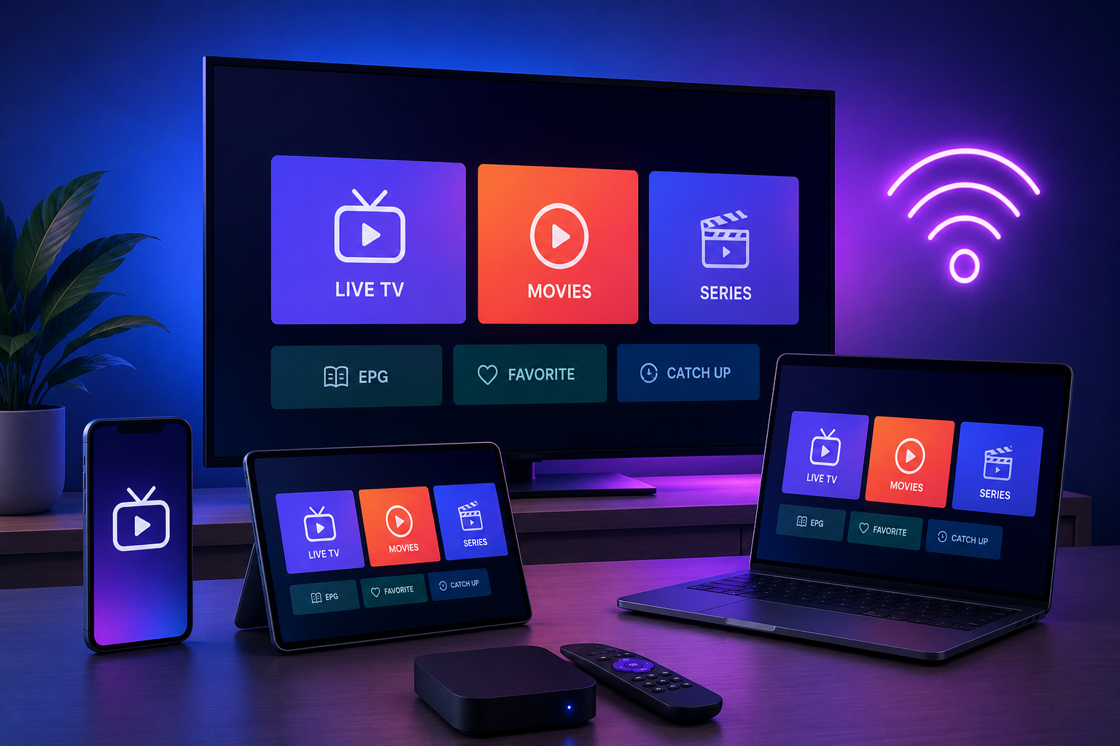
In practice, most subscribers interact with the provider through three pieces of infrastructure: a playlist file such as an M3U link, an electronic program guide that shows what is currently playing, and a player app on a smart TV, Android box, Fire Stick, phone, or computer. The provider sends the stream; the player app handles playback.
How an ip-tv provider Works, Step by Step
Understanding the technical flow makes it easier to diagnose buffering, login errors, or guide problems. Here is what happens from the provider’s server to your screen.
- The provider sources channels. It takes feeds from broadcasters, satellite uplinks, or licensed content aggregators and encodes them into digital streams.
- You subscribe and receive access credentials. After payment, the provider sends either an M3U playlist link, Xtream Codes login, or a custom app login tied to your account.
- You install a compatible player. Popular options include IPTV Smarters, TiviMate, Sparkle, or the provider’s own branded app. The player communicates with the provider’s server.
- The app loads the channel list and guide. The electronic program guide pulls metadata so you can see what is live, what is coming up, and sometimes catch-up availability.
- You select a channel or title. The player requests the stream from the server, and the server sends video packets over your broadband connection.
- Your device decodes and displays the video. The player buffers a few seconds of content to smooth out small network fluctuations, then plays it as standard television.
A single weak point — the provider’s server load, your Wi-Fi, the player app’s codec support, or your internet speed — can affect the experience. That is why trial periods and peak-hour testing reveal much more than a provider’s marketing page.
Concrete Benefits of Using an ip-tv provider
For the right household, an ip-tv provider can replace cable and reduce monthly costs without sacrificing the live programming you care about. The key is matching the provider’s strengths to your viewing habits.
Sports without cable contracts
An ip-tv provider for sports often carries niche leagues, pay-per-view events, and international matches that are expensive or impossible to get through a standard cable package. Many sports-first providers dedicate server capacity to live events because they know buffering during a match is the fastest way to lose a subscriber.
One subscription across multiple devices
Unlike a cable box tied to one television, most ip-tv provider accounts work on smart TVs, phones, tablets, PCs, and streaming sticks. The same login can travel with you, which makes it practical for frequent travelers or split-location households.
Channel variety without a hardware rental
You do not need a technician visit, a proprietary DVR, or a cable company box. Because the provider delivers over IP, the only hardware you need is the device you probably already own.
Catch-up and on-demand libraries
Some providers include time-shifted viewing for select channels, letting you start a show that aired hours earlier. Many also bundle a movie and series library alongside live TV, which reduces the need for separate streaming subscriptions.
Honest Limitations and Risks
An ip-tv provider is not automatically better than cable or a licensed streaming service. The trade-offs are real, and understanding them protects you from a bad purchase.
✓ Benefits & Pros
Lower monthly cost than traditional cable, often with more channels.
Works on devices you already own: smart TVs, Fire Stick, Android, iOS, PC.
Strong sports and international channel coverage if you choose the right provider.
No long-term contract; monthly plans and trial periods are common.
Catch-up TV and on-demand libraries can replace extra streaming apps.
✗ Limitations & Cons
Buffering can occur if the provider oversells server capacity or your Wi-Fi is weak.
Legal status varies widely; not all providers hold proper carriage rights.
Customer support can be slow, especially from gray-market resellers.
Channel lists can change without notice if licensing agreements shift.
The cheapest ip-tv subscription is often the least stable — low price can signal overloaded servers.
RECOMMENDED RESOURCE
ip-tv provider
Review up-to-date regional server maps and infrastructure.
View the ip-tv provider Platform →iptv service vs cable tv vs Streaming: Honest Comparison
Choosing between an ip-tv provider, cable television, and a licensed streaming service depends on what you value most: live channel variety, plug-and-play simplicity, or legal predictability. The table below compares the typical trade-offs.
For cord-cutters who want live channels and sports at a lower price, an ip-tv provider can be the right fit. For households that value zero setup risk and guaranteed support, cable or licensed streaming remains the safer choice.
See current details, seasonal promos, and full tier packages.
Learn more about ip-tv provider →Who an ip-tv provider Works Best For
Not every household needs an ip-tv provider. But for several profiles, the service solves a specific problem better than mainstream alternatives.
Sports fans who follow multiple leagues
If your teams are spread across different broadcasters, a curated ip-tv provider for sports can bring those feeds into one guide. Look for a provider that mentions anti-freeze technology and live-event server scaling — not just a long channel count.
Expats and multilingual households
International news, entertainment, and sports channels from your home country are often scarce on local cable. An ip-tv provider with regional packages can fill that gap.
Budget-conscious cord-cutters
If you already have fast internet and a streaming device, an ip-tv provider can replace a $90 cable bill with a monthly subscription under $30. Just do not chase the cheapest ip-tv subscription at the expense of server quality.
Tech-savvy users comfortable with setup
Using an ip-tv provider usually means installing a third-party app, pasting a playlist link, or entering credentials. It is not difficult, but it is more involved than downloading Netflix.
How to Get Started with an ip-tv provider in 7 Steps
If you decide an ip-tv provider is worth testing, follow this sequence to lower your risk and avoid wasting money on a service that does not match your location or devices.
- Confirm your internet speed and device. A stable 25 Mbps connection is the practical floor for HD streams; 50 Mbps or more is better for 4K and multi-device use. Hardwired Ethernet beats Wi-Fi for live sports.
- Research how to choose an ip-tv provider that fits your channel list. Start with the channels you cannot live without. Ask if the provider offers a trial and whether those specific channels work during peak hours.
- Check ip-tv provider reviews reddit with skepticism. Reddit threads can reveal real experiences, but they are also full of affiliate spam and fake recommendations. Look for users who share concrete details about buffering, billing, and support response times.
- Verify legal status where you live. Knowing where to buy ip-tv legally means choosing a provider that can explain its licensing. If the provider avoids the question or claims “all channels worldwide,” treat that as a red flag.
- Start with a short-term plan or trial. A reliable ip-tv provider should offer a 24-hour trial or a one-month plan. Do not commit to a year just to save a few dollars before you have tested the service in your own home.
- Install the player and load the playlist. Use a well-known player such as TiviMate, IPTV Smarters, or Sparkle. Enter the credentials exactly as provided, and test both live channels and on-demand content.
- Test during peak hours. The true test of a reliable ip-tv provider no buffering is weekday evenings, not Tuesday at 10 a.m. Watch the channels you value most at the times you normally watch them.
Final Verdict: Choosing a Reliable ip-tv provider
The best ip-tv provider 2026 is not the one with the largest channel count or the cheapest monthly bill. It is the one that stays stable during the matches you watch, supports the device already sitting in your living room, and can explain its legal position without evasion. Start with a short plan, test during peak hours, and never pay for a full year before you have seen the service survive a busy weekend.
If you want to compare current plans, channel lists, and regional server maps side by side, the link below gives you a practical starting point.
Featured Streaming Selection:
See ip-tv provider Pricing →Affiliate Disclosure: Clicking this secure link verified by our network supports our team through standard partnership terms at zero extra cost to your invoice.
Frequently Asked Questions
This article contains affiliate links. Our editorial analysis remains independent.