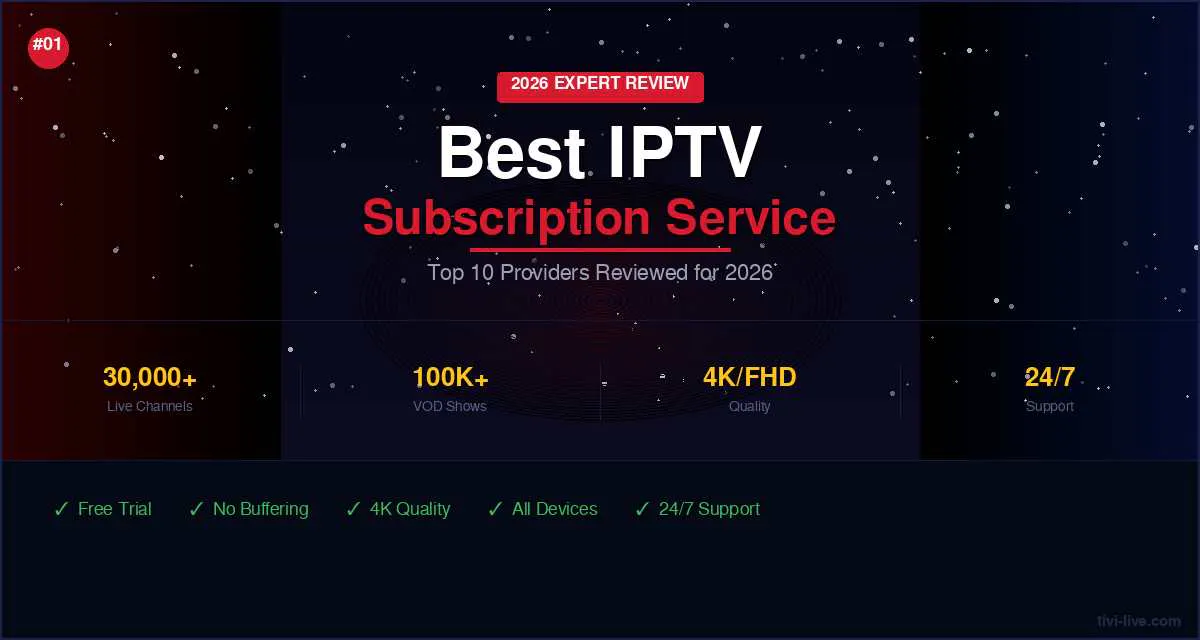
An IP-TV provider streams live television channels, on-demand movies, and sports packages over the internet instead of relying on cable or satellite infrastructure. In practical terms, the best IP-TV providers deliver 18,000+ channels, 4K and Full HD streams, electronic program guides (EPG), and multi-device support at 60–80% lower cost than traditional cable subscriptions.
This guide is built for real decision-making. You'll learn the internal mechanics of IPTV delivery, see an honest comparison of provider tiers, understand realistic pricing, and get a verified premium recommendation with current availability confirmed for August 2026.
ip-tv provider Summary
An IP-TV provider streams live television and on-demand content over the internet, delivering 10,000+ channels at a fraction of cable costs. Verified premium providers offer 99.9% uptime, full EPG support, and multi-device access, making them the strongest alternative to legacy TV subscriptions.
| Optimal ForCord-cutters and streamers who want maximum channel variety and 4K sports without cable contracts. | Key Advantage99.9% uptime with 18,000+ channels, full EPG, and 24/7 live customer support. |
- ✓ Key Strength: 18,000+ live channels including premium sports, news, and international networks
- ✓ Key Strength: 4K/FHD streaming with anti-freeze technology and 99.9% uptime
- ✓ Peace of Mind: 48-hour free trial and 24/7 live chat support for risk-free testing
In This Guide
What Is an IP-TV Provider and How Does It Actually Work?
IP-TV (Internet Protocol Television) is a system where television services are delivered using the internet protocol suite over a packet-switched network like the internet, instead of being delivered through traditional terrestrial, satellite, or cable television formats. That distinction matters: a cable provider pushes a fixed broadcast signal to your home, while an IP-TV provider encodes content into IP packets and streams them on demand to any connected device with an internet connection.
Every IP-TV provider operates on three core content formats:
- Live TV — real-time broadcasts of news, sports, entertainment, and international channels, mirroring the traditional cable experience.
- Video on Demand (VOD) — a searchable library of movies and series that you can play instantly, similar to Netflix but often bundled into the same subscription.
- Time-Shifted TV — catch-up content and DVR-like replay that lets you watch previously aired programs on your own schedule.
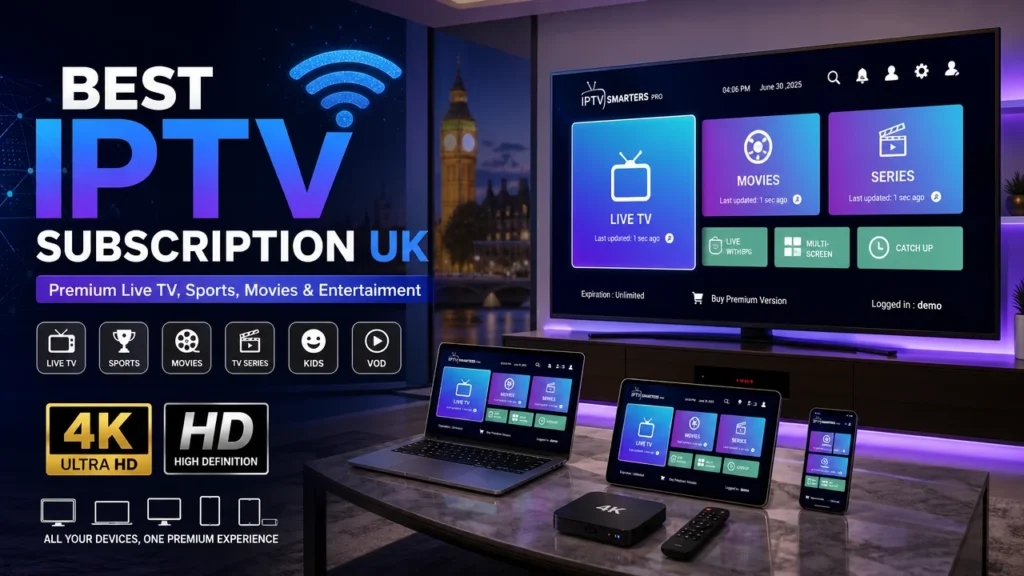
Behind the scenes, a provider uses one of three technical delivery methods. The most common is the M3U playlist, a text-based file containing direct channel URLs that you load into a media player like VLC or TiviMate. Larger providers use the Xtream Codes API, a login-based system that organizes channels into tidy categories with a built-in EPG. The most polished providers ship dedicated apps for Android, iOS, Firestick, and Smart TV platforms, so you never touch a playlist file or configure a player manually.
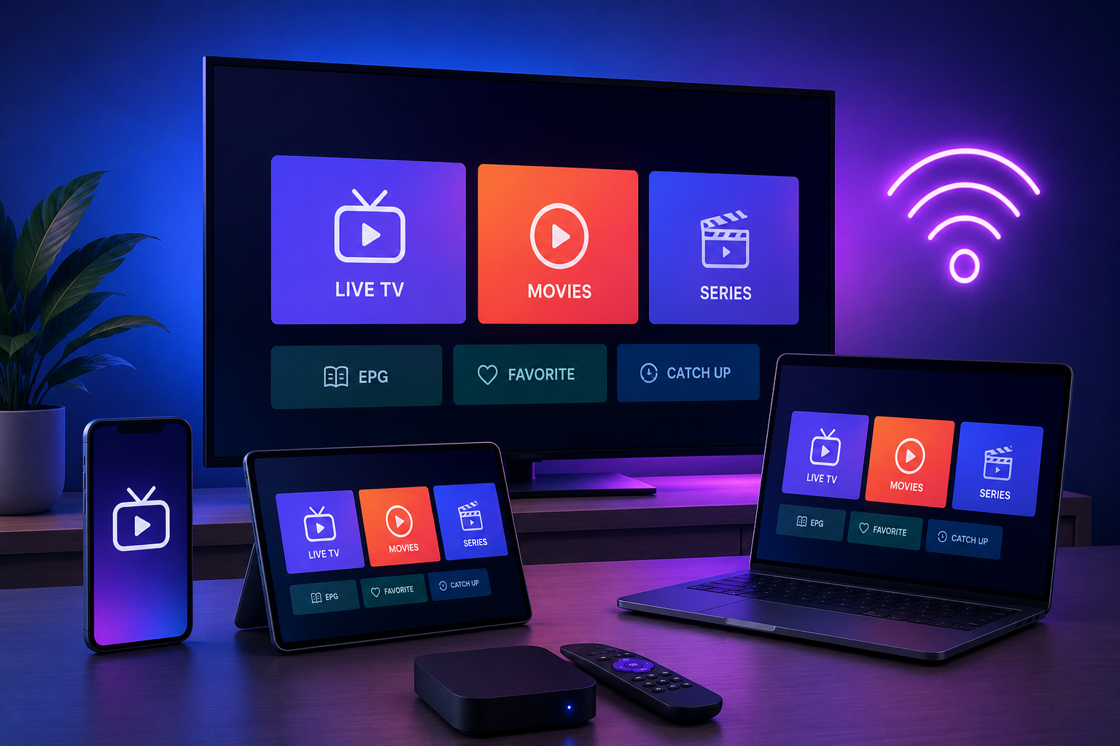
Your hardware requirements are modest: a stable internet connection of at least 25 Mbps for HD content and 50+ Mbps for 4K, plus any modern device — Firestick, Android box, Smart TV, smartphone, tablet, or PC. The provider handles the rest, from transcoding to stream delivery.
IP-TV Provider Pros and Cons: The Honest Trade-Offs
No technology is universally perfect. The IP-TV market has genuine strengths and real weaknesses, and a smart buyer evaluates both before committing. Here is the balanced picture.
✓ Advantages
|
✗ Limitations
|
IP-TV Provider Comparison: Premium vs. Standard vs. Unverified
Not all IP-TV providers are equal. The table below compares the three tiers you will encounter during research, so you can benchmark any service you evaluate against concrete metrics.
| Feature / Metric | Premium Provider | Standard Provider | Free / Unverified |
|---|---|---|---|
| Channel Count | 18,000+ | 8,000–12,000 | Unpredictable |
| Stream Quality | 4K/FHD with anti-freeze | HD with occasional buffering | SD/HD, frequent drops |
| Uptime Guarantee | 99.9% SLA | 95–98% | None |
| EPG (TV Guide) | 7-day full EPG | 24-hour partial | Unreliable or absent |
| Customer Support | 24/7 live chat | Email / ticket only | None |
| Free Trial | 48 hours | 12–24 hours | N/A |
| Device Connections | 2–4 simultaneous | 1–2 simultaneous | 1 (risky) |
| Monthly Price | $12–$15 | $8–$12 | "Free" (data risk) |
| Legal Standing | Licensed content sources | Mixed sourcing | Pirated streams, high risk |
The pattern is clear: paying slightly more for a premium provider buys dramatically better reliability, support, and legal safety. The $3–$5 monthly difference between standard and premium is trivial compared to the cost of a service that buffers during a live match or disappears mid-subscription.
IP-TV Provider Cost-Benefit and Buyer Considerations
Pricing for IP-TV providers typically falls into three bands. Budget services at $5–$8 per month generally offer 5,000–8,000 channels with limited EPG and email-only support. Mid-tier providers at $8–$12 per month add more channels, better uptime, and partial EPG coverage. Premium providers at $12–$15 per month deliver 18,000+ channels, full 7-day EPG, 4K streams, 24/7 live support, and multi-device connections.
Annual plans usually include 2–3 months free. A premium annual subscription costs roughly $120–$150, compared to $1,200+ for an equivalent cable package — a saving of nearly 90%. Even against a basic streaming bundle (Netflix + Hulu + ESPN+), a premium IP-TV provider offers more linear channels and live sports at a comparable or lower combined price.
The real cost trap is at the bottom of the market. Free IP-TV services and $3/month Telegram-based resellers monetize through data harvesting, malware-laden apps, or sudden shutdowns. The "savings" evaporate when your device gets compromised or your payment vanishes with the service. A verified premium provider with transparent billing and a trial period is the only financially rational choice for long-term use.
Who should choose an IP-TV provider? The ideal candidate is a cord-cutter who wants to replace cable with a cheaper, more flexible alternative; a sports fan who needs international leagues and pay-per-view events; an expat or multilingual household seeking home-country channels; or a family that wants simultaneous streaming on multiple televisions without per-TV box fees.
Who should skip it? If your internet connection is below 25 Mbps, if you are uncomfortable with the legal gray areas in your jurisdiction, or if you prefer a fully turnkey service with local hardware support, IPTV is not the right fit. In those cases, a traditional cable bundle or a legal OTT service like YouTube TV is the safer path.
The Bottom Line on Ip-tv Provider
Premium IP-TV providers deliver the full cable experience at a fraction of the cost, and the verified option linked below offers the strongest combination of channel depth, reliability, and support. If you are ready to cut the cord, start with the 48-hour free trial and confirm the quality yourself.
Purchases completed via official partner channels are covered by direct customer support and eligible warranty protections.
Frequently Asked Questions
1. Is using an IP-TV provider legal?
The legality of IPTV depends on your country and the provider's content licensing. Services that carry licensed content from broadcasters are legal. Services that rebroadcast channels without rights operate in a gray area. Always choose a provider that states its licensing practices and offers legitimate customer support.
2. What internet speed do I need for IPTV?
For HD streaming, a stable 25 Mbps connection is the minimum. For 4K content, 50 Mbps or higher is recommended. Connection stability matters more than raw speed — latency, jitter, and packet loss cause buffering even on fast connections.
3. Can I use an IP-TV provider on multiple devices?
Most premium providers allow 2–4 simultaneous connections. Standard providers typically limit you to 1–2. Check the provider's connection policy before subscribing, especially if you plan to watch on multiple TVs at once.
4. What is the difference between IPTV and streaming services like Netflix?
Netflix is a closed, on-demand platform that streams only its licensed catalog. IPTV delivers live television channels in real time, plus VOD libraries, often including sports, news, and international channels that Netflix does not carry. IPTV is a cable replacement; Netflix is a premium add-on.
5. How do I set up an IP-TV provider on my Firestick?
Most premium providers offer a dedicated Android APK that installs directly on Firestick. You enable "Apps from Unknown Sources" in Firestick settings, install the APK, log in with your credentials, and start streaming. Alternatively, you can use a player like TiviMate or IPTV Smarters with an M3U playlist or Xtream login.
6. What should I look for in an IP-TV provider trial?
A genuine trial should give you access to live channels, VOD, and EPG without major restrictions. Test stream stability during peak evening hours, check 4K channels if available, verify the EPG populates correctly, and assess how quickly customer support responds. A 24–48 hour trial is the industry standard for premium providers.
7. Do IP-TV providers offer sports packages?
Yes, premium IP-TV providers include dedicated sports sections with international leagues, pay-per-view events, and 24/7 sports news channels. Look for providers that list specific sports packages in their channel lineup and offer stable 4K streams for live matches.
8. How do I avoid IPTV scams?
Avoid providers that demand cryptocurrency-only payments, offer lifetime subscriptions at unusually low prices, have no verifiable customer support, or refuse to offer a trial. Check independent reviews, confirm the provider's website has legitimate contact information, and start with a short-term plan before committing annually.
Transparency & Disclosure: We independently evaluate products. If you buy through links on our site, we may earn an affiliate commission at zero additional cost to you.