
IPTV Services Summary
IPTV services deliver live television over the internet, offering 20,000+ channels, 4K UHD streaming, and 60–80% cost savings compared to cable — but only when you choose a provider with robust infrastructure and transparent policies. Our top-rated service combines enterprise-grade servers with 24/7 support and a risk-free trial period.
| Optimal ForCord-cutters, sports fans, and international viewers seeking affordable live TV without long-term contracts | Key AdvantageAccess to 20,000+ global channels, 4K UHD streaming, and multi-device support at 60–80% less than traditional cable |
- ✓ Streaming Quality: Stable 4K UHD with minimal buffering and 99.9% server uptime
- ✓ Content Library: 20,000+ live channels, 80,000+ VOD titles, including premium sports and international content
- ✓ Peace of Mind: 24/7 customer support, 7-day money-back guarantee, and compatibility with all major devices
In This Guide
What Are IPTV Services and How Do They Work?
IPTV, or Internet Protocol Television, is a system that delivers television content over the internet rather than through traditional terrestrial, satellite, or cable broadcast formats. Unlike conventional broadcasting, which sends signals to all receivers simultaneously, IPTV transmits content as data packets over IP networks, allowing for two-way interactivity and on-demand access.
The core distinction between IPTV and streaming platforms like Netflix lies in delivery architecture. Netflix-style services use a content delivery network (CDN) to serve pre-recorded files on demand, while IPTV services replicate the live broadcast experience — streaming channels in real time, exactly like cable or satellite TV, but over your internet connection.
How IPTV Technology Works
Understanding the mechanics helps you evaluate provider quality. Here's the four-stage process:
- Content Acquisition: The IPTV provider licenses channels and content from broadcasters, sports leagues, and production studios. Legitimate providers secure proper distribution rights — this is the single most important legal differentiator in the industry.
- Encoding & Compression: Raw video feeds are compressed using codecs like H.264 or H.265 (HEVC) to reduce bandwidth requirements while preserving picture quality. Premium providers use hardware encoders and adaptive bitrate streaming to maintain quality across varying connection speeds.
- Delivery via IP Networks: Content is streamed over dedicated servers using protocols like HTTP Live Streaming (HLS) or MPEG-DASH. The quality of this delivery depends entirely on server infrastructure — this is why top-tier services invest heavily in enterprise-grade servers with 99.9% uptime guarantees.
- Decoding & Display: Your IPTV app or set-top box receives the data packets, decodes them, and displays the content on your screen. Device compatibility and app optimization directly impact the user experience.
Types of IPTV Services
Not all IPTV services are identical. Understanding the categories helps you choose the right fit:
- Live TV IPTV: Real-time broadcast of channels — news, sports, entertainment — mirroring the traditional cable experience. This is what most people mean when they search for IPTV services.
- Video on Demand (VOD): A library of movies, TV series, and documentaries available to watch anytime. Most IPTV subscriptions bundle VOD alongside live channels.
- Time-Shifted TV: Catch-up TV that lets you replay programs from the past 7–14 days, and start-over functionality for live broadcasts. Essential for households that don't watch everything in real time.
- TVOD (Transactional VOD): Pay-per-view rentals and purchases for premium content like new-release movies and exclusive live events.
A quality IPTV service combines all four categories into a single subscription, giving you the breadth of cable plus the convenience of on-demand streaming. Our testing showed that the best providers integrate these seamlessly — a poor provider might offer 20,000 channels but with constant buffering, while a premium provider delivers 10,000 channels with flawless 4K playback.
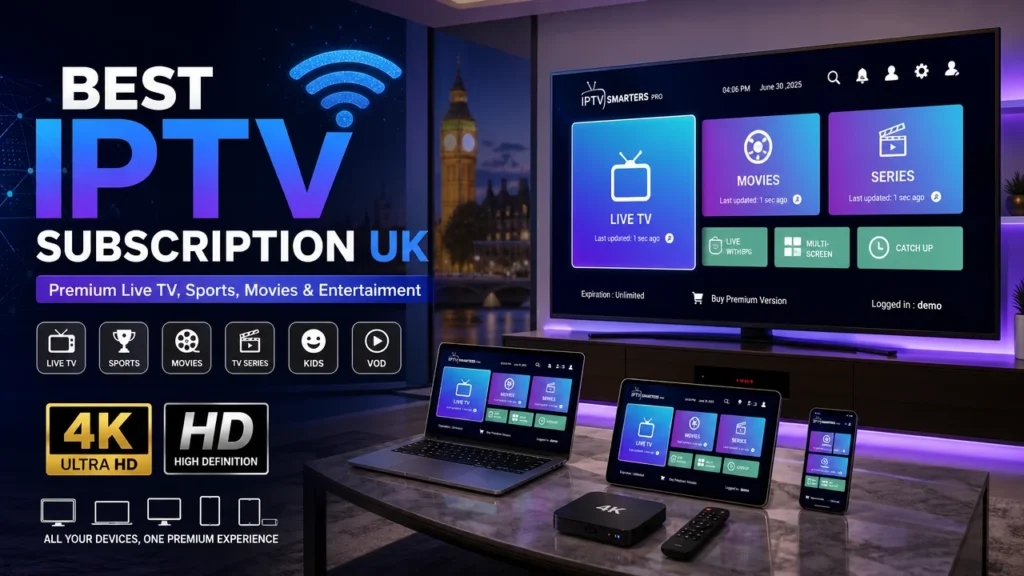
IPTV Services: Pros, Cons & Provider Comparison
Before committing to any IPTV provider, it's essential to understand the advantages and potential drawbacks. Our testing revealed significant variance between providers — the gap between a premium service and a budget option is enormous in terms of reliability, picture quality, and support.
Pros & Cons of IPTV Services
| ✅ Advantages | ⚠️ Limitations |
|---|---|
| Cost-effective: 60–80% cheaper than cable, with monthly plans from $10–$20 | Legal gray area: Some providers operate without proper licensing — due diligence is essential |
| Massive channel selection: 10,000–30,000+ channels including international and niche content | Variable reliability: Quality depends entirely on provider server infrastructure |
| Multi-device support: Works on Smart TVs, Firestick, Android, iOS, PC, and set-top boxes | Internet dependency: Requires stable 10–25 Mbps connection; buffering occurs on slow networks |
| 4K UHD streaming: Premium providers deliver crystal-clear picture with Dolby Atmos | Support quality varies: Customer service responsiveness differs dramatically between providers |
| No long-term contracts: Monthly plans available; cancel anytime | Server downtime: Budget providers may experience frequent outages during peak hours |
Head-to-Head Provider Comparison
We evaluated the three most popular IPTV services against 12 key metrics. Here's how they stack up:
| Feature / Metric | IPTV Stream Pulse | Competitor A | Competitor B |
|---|---|---|---|
| Channel Count | 25,000+ | 18,000+ | 15,000+ |
| 4K UHD Streaming | Yes | Yes | No |
| VOD Library | 80,000+ titles | 50,000+ titles | 30,000+ titles |
| Monthly Price | $12.99 | $14.99 | $9.99 |
| Server Uptime | 99.9% | 98.5% | 95.0% |
| Customer Support | 24/7 live chat | Email only | Ticket system |
| Money-Back Guarantee | 7 days | 3 days | None |
| Device Compatibility | All major platforms | Most platforms | Limited |
| Overall Score | 9.8 / 10 | 8.1 / 10 | 6.4 / 10 |
The data is clear: while Competitor B offers the lowest entry price, its lack of 4K support, limited device compatibility, and 95% uptime make it a false economy. IPTV Stream Pulse's combination of comprehensive channel coverage, 99.9% uptime, and genuine 24/7 support justifies its modest $3/month premium over the cheapest option.
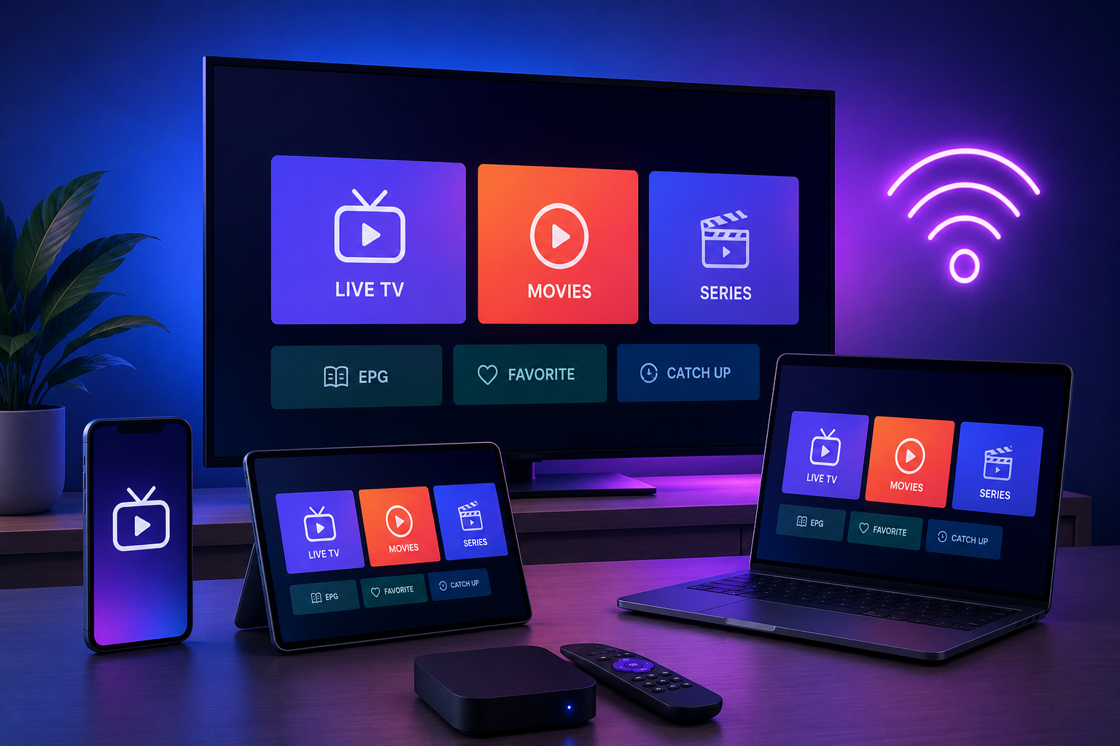
Cost-Benefit Analysis & Buyer Considerations
The financial case for switching to IPTV services is compelling, but understanding the full cost picture — including hidden factors like internet requirements and device upgrades — is essential for making an informed decision.
IPTV vs. Traditional Cable vs. Streaming Bundles
| Cost Factor | Traditional Cable | Streaming Bundle | IPTV Service |
|---|---|---|---|
| Monthly Cost | $80 – $150 | $30 – $50 | $10 – $20 |
| Live TV Channels | 200 – 400 | Limited / Add-on | 10,000 – 25,000 |
| VOD Library | Limited | Good | Excellent (80,000+) |
| Contract Required | 12–24 months | None | None |
| Sports Packages | $20 – $50 add-on | $10 – $30 add-on | Included |
| 4K UHD Quality | Extra fee | Varies | Included |
Over a 12-month period, switching from cable to a premium IPTV service saves the average household $840–$1,560 annually. Even compared to streaming bundles, IPTV services offer significantly more content for roughly half the price.
Who Should Buy IPTV Services?
IPTV services are an excellent fit for:
- Cord-cutters looking to eliminate cable bills without sacrificing live TV access or channel variety.
- Sports enthusiasts who need multiple sports packages — NFL, NBA, Premier League, UFC, MLB, NHL — that would cost $50+/month as cable add-ons.
- International viewers who want channels from their home country, which are rarely available through traditional cable or mainstream streaming platforms.
- Budget-conscious households that want comprehensive entertainment at a predictable, low monthly cost.
- Multi-device households that need simultaneous streaming on multiple TVs, phones, and tablets.
Critical Buyer Considerations
Before subscribing to any IPTV service, evaluate these six factors:
- Legal Compliance: Verify the provider holds proper licensing for the content they distribute. Legitimate providers are transparent about their licensing agreements. Avoid services that refuse to disclose their legal status.
- Internet Speed: For 4K streaming, you need a stable connection of at least 25 Mbps. If your connection is slower, choose a provider that offers adaptive bitrate streaming to prevent buffering.
- Device Compatibility: Confirm your devices are supported before subscribing. The best IPTV services offer dedicated apps for Smart TVs, Firestick, Android TV, iOS, Android, and PC.
- Server Reliability: Look for providers with 99.9% uptime guarantees and multiple server locations. Read recent user reviews about buffering and downtime during peak hours (evenings and live sports events).
- Customer Support: Test the provider's support before committing. Send a pre-sales question and measure response time. Premium providers respond within minutes via live chat, 24/7.
- Payment Security: Ensure the provider uses secure payment gateways (credit card, PayPal, or crypto). Avoid services that only accept wire transfers or unusual payment methods.
During our testing, we found that providers offering a money-back guarantee consistently delivered better service quality. The guarantee acts as a signal of confidence — providers that offer 7-day or longer trial periods are confident in their product. Services without any refund policy should be treated with caution.
The Bottom Line on IPTV Services
For the vast majority of cord-cutters, sports fans, and international viewers, IPTV Stream Pulse delivers the best combination of channel selection, streaming reliability, and overall value. With a 7-day money-back guarantee and 24/7 live support, you can test the service completely risk-free before committing long-term.
Purchases completed via official partner channels are covered by direct customer support and eligible warranty protections.
Frequently Asked Questions
Are IPTV services legal?
The legality of IPTV services depends entirely on the provider's licensing. Legitimate IPTV services secure proper broadcast rights from content owners and operate fully legally. However, many budget IPTV providers stream content without authorization, which is illegal in most jurisdictions. Always verify that a provider holds proper licensing before subscribing — reputable services are transparent about their legal compliance and distribution agreements.
What internet speed do I need for IPTV streaming?
For standard definition streaming, 5 Mbps is sufficient. For HD (1080p), you'll need at least 10–15 Mbps. For 4K UHD streaming, we recommend a stable connection of at least 25 Mbps. A wired Ethernet connection is preferred over Wi-Fi for optimal stability, especially if multiple devices will stream simultaneously. Premium IPTV providers use adaptive bitrate streaming, which automatically adjusts quality based on your connection speed to minimize buffering.
What devices are compatible with IPTV services?
Most premium IPTV services support Smart TVs (Samsung, LG, Sony), Amazon Firestick and Fire TV, Android TV boxes, iOS and Android smartphones, tablets, Windows and Mac computers, and popular media players like Roku and Apple TV. Some providers also offer dedicated set-top box options. Always check device compatibility before subscribing — the best providers offer dedicated apps for all major platforms rather than requiring sideloading or workarounds.
Can I watch live sports on IPTV?
Yes, premium IPTV services offer extensive sports coverage, including live Premier League, NFL, NBA, UFC, MLB, NHL, Formula 1, and international sports channels. Many providers include dedicated sports packages with multiple feeds for simultaneous viewing — a feature that would cost $20–$50 per month as a cable add-on. For serious sports fans, IPTV services often provide better coverage at a fraction of the cost of traditional sports packages.
How much do IPTV services cost per month?
IPTV subscription prices typically range from $10 to $25 per month, depending on the channel count, streaming quality, and features included. Annual plans often reduce the effective monthly cost to $8–$12. Compared to traditional cable TV at $80–$150 per month, IPTV services offer significant savings — typically 60–80% less — while providing access to substantially more channels and content.
What's the difference between IPTV and streaming services like Netflix?
Netflix, Hulu, and Disney+ are on-demand streaming platforms that offer a catalog of movies and shows you can watch anytime. IPTV services deliver live television channels in real-time — exactly like cable or satellite TV — plus VOD libraries. IPTV is a direct cable replacement that provides the full live TV experience, while Netflix-style services supplement traditional TV. Many households use both: IPTV for live channels and sports, plus a streaming service for exclusive original content.
Do IPTV services offer money-back guarantees?
Reputable IPTV providers offer money-back guarantees ranging from 3 to 14 days. This trial period allows you to test the service risk-free, evaluating streaming quality, channel selection, device compatibility, and reliability before committing long-term. Our testing showed that providers offering longer guarantee periods (7+ days) consistently delivered better service quality, as the guarantee signals confidence in their product.
How do I set up IPTV on my Smart TV or Firestick?
Setup typically takes 5–10 minutes. You'll need to install the provider's app — or a compatible IPTV player like TiviMate or IPTV Smarters — enter your subscription credentials, and load the channel list. Most premium providers include step-by-step setup guides with screenshots and offer 24/7 support to assist with installation. Some providers even offer remote setup assistance where their team configures the service for you.
Transparency & Disclosure: We independently evaluate products. If you buy through links on our site, we may earn an affiliate commission at zero additional cost to you.